BizPlans
Gum Arabic in Kenya: The Export Opportunity Behind the Supply Gap
Kenya-first insights, practical and grounded.
Published 24/10/2026 - 4 min read
Gum Arabic in Kenya: The Export Opportunity Behind the Supply Gap
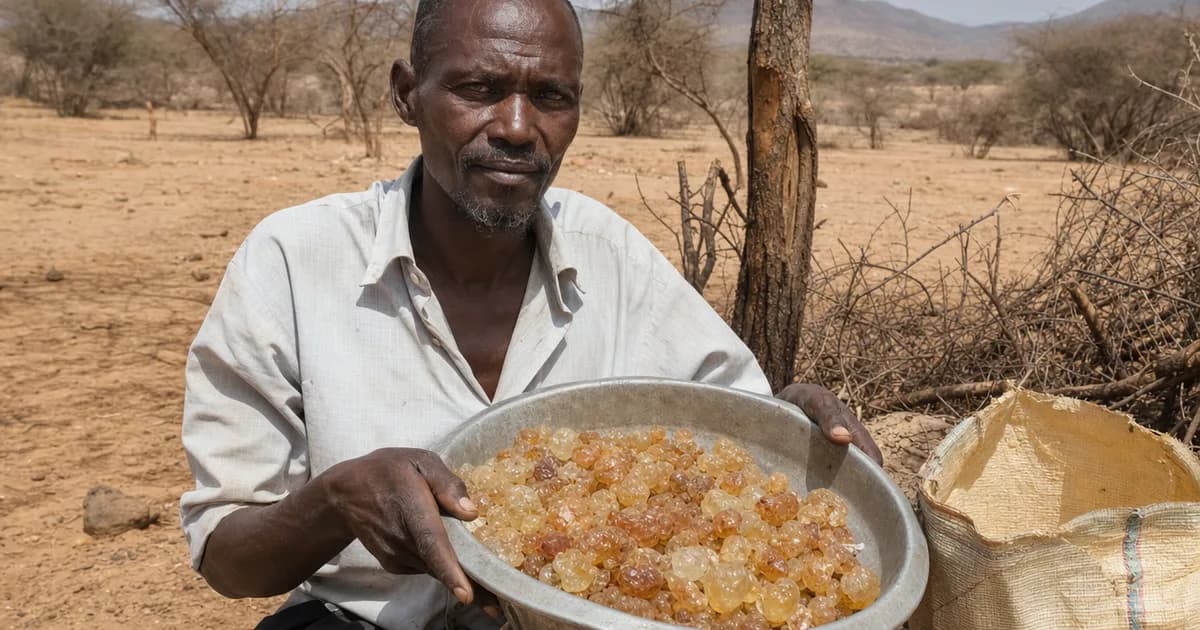
Gum arabic is the hardened sap of acacia trees, sold into food, beverage, pharmaceutical and cosmetic manufacturing as a stabiliser and emulsifier under the food additive code E414. Sudan has historically supplied the largest share of world trade. Conflict there has disrupted that supply, and buyers have been actively looking at alternative African origin.
Kenya's collection areas are the arid and semi-arid counties: Isiolo, Turkana, Marsabit, Samburu, Baringo, Kitui, Laikipia, Wajir and Mandera among them.
What is claimed, and what is documented
A Kenyan exporter's own published material states that Sudan's conflict disrupted around 70 per cent of global supply, that Kenya's annual potential is about 12,000 tonnes against roughly 1,000 tonnes currently produced, and that the region has 47,000 tonnes of untapped potential across Kenya, Ethiopia and South Sudan. Those are the exporter's figures, not an independent market study, and they should be treated as such.
What is documented separately: a development project with the exporter and KCB Bank launched a prepayment facility in May 2026 so that aggregators can buy during the collection peak. The stated problem was liquidity, not demand — collectors had gum to sell and aggregators did not have the cash to buy it. That is the most useful fact in this value chain.
A public training report from a 2025 collection-area workshop records a Marsabit trade price of about KSh 700 per kilogram and notes that shipping a 50 kilogram sample abroad for quality testing can cost around USD 100. Both figures are dated and location-specific. Verify current prices with your own buyers.
What buyers actually specify
A public buyer request circulating in 2026 for gum arabic into Kenya asks for: acacia species (for example Acacia senegal or seyal), origin and crop year, hand-picked or select grade, colour and particle form, moisture, ash, viscosity, microbiological and heavy-metal limits, E414 food compliance, a certificate of analysis, a phytosanitary certificate and lined export bags. It also asks for a specification sheet, recent product photographs, minimum order quantity, inspection terms, payment method, lead time and container loading quantity.
That list is a useful template for what "export-ready" means. Grading, moisture and foreign matter are the failure points, and they are decided at collection and drying, not at the port.
What an aggregator or co-operative should build
- Collector and lot register — who collected, where, when, species if known, weight delivered.
- Grading and cleaning records — sieve and sort results, hand-picked versus select, rejects and their reasons.
- Lot separation — keep species, grade and collection date separate; blended lots are harder to sell and easier to dispute.
- Sample protocol — what you send, how it is identified, who pays courier and testing, what acceptance means.
- Cost per saleable kilogram — purchase, bags, cleaning, drying, storage, transport, testing, and the financing cost of holding stock.
- Working-capital plan for the peak — the largest cumulative cash deficit, not the average month.
- Buyer enquiry sheet — specification, price basis, delivery point, deductions, payment days and rejection terms.
The Fresh Produce Aggregation Trader OS already uses the same lot, grading-loss and working-capital structure, which is why it transfers to a gums operation even though the commodity is different.
Before you spend money
Confirm with the county government and the relevant national authority what permits apply to harvesting, movement and trade of gums in your area, including access to community land. Do not pay anyone for "buyer access", and do not pay to reveal an unnamed buyer. A sample sent to a buyer is not an order, and a price quoted on a social media group is not a contract.
Last verified: 24 October 2026. Rules, fees, tariffs and market-access decisions change. Confirm the current position with the named authority (or your buyer and clearing agent) before committing money. This is business-planning guidance, not legal, tax, agronomic or export-compliance advice.
Sources
- Acacia EPZ: Kenyan gum arabic exporter operating material and supply-gap claims
- Swisscontact: access to finance and the gum arabic value chain in northern Kenya
- Community-based gums and resins training report, Marsabit 2025 (price and testing observations)
- Example public buyer requirement for gum arabic (specification fields)
Business startup decision checklist
A free checklist to turn the next decision into a practical action.
More on exporting and compliance
These articles work together: market access and tariff windows, registration and establishment approvals, conformity and clearance changes, and the records a buyer or regulator will ask for.
More insights
Use the full model