BizPlans
Kenya Tea in 2026: Quality Reforms, Levies and a Shifting Buyer Map
Kenya-first insights, practical and grounded.
Published 24/10/2026 - 3 min read
Kenya Tea in 2026: Quality Reforms, Levies and a Shifting Buyer Map
Tea remains Kenya's largest agricultural export, and in 2026 it is being pulled in two directions at once: reforms that push quality and local value addition, and market shocks that expose how few destinations absorb the crop.
The reform programme
The Ministry of Agriculture and Livestock Development set out a ten-point reform agenda, reported against a target of doubling smallholder earnings per kilogram of green leaf by 2027, together with green-leaf quality guidelines and enforcement of the "two leaves and bud" plucking standard to close the price gap between eastern and western tea blocks.
Other reported elements: a Strategic Tea Quality Improvement Programme ranking factories by annual tasting competitions and supporting the lowest-ranked; a new Mombasa laboratory for made-tea analysis including heavy metals, pesticide residues and microbiological testing; a KSh 3.7 billion concessionary facility at 5 per cent for factory modernisation, including diversification into orthodox tea, which attracts higher prices in Europe; and a reduction in factory management fees from 2.5 per cent to 1.5 per cent.
On the levy side, a Tea Levy for 2026 has been proposed to fund promotion, branding, research and quality assurance, and a 100 per cent levy on imported teas under the Tea (Levy) Regulations 2025/26 has been reported as a protective measure against dumping of cheap tea. Factory directors have opposed parts of this, so verify the current status rather than relying on the announcement.
The buyer map is moving
Kenya's tea export profile is unusually concentrated: reporting puts Pakistan at roughly 40 per cent of exports, Egypt around 19 per cent, the United States about 9 per cent and the UAE about 5 per cent. The Middle East conflict disrupted shipping in 2026: the East African Tea Trade Association reported around 8 million kilograms stuck in Mombasa warehouses and losses accumulating weekly, with the Middle East accounting for a fifth to a quarter of exports.
Against that, market access has improved in other directions. Kenyan reporting says a 35 per cent duty on Kenyan tea in South Africa was removed in November 2025 under a Southern African Customs Union arrangement, and that market access arrangements with China have been concluded, alongside duty-free access to China under the zero-tariff measure for eligible products.
What an exporter or packer should control
- Destination-by-destination costing — auction versus direct sale, freight and insurance exposure, payment terms and currency.
- Quality evidence — plucking standard, factory grade, tasting or laboratory results that a buyer can verify.
- Contract terms under disruption — who carries rerouting cost, what happens to delivery windows, and how payment is released.
- Buyer concentration — a deliberate limit on how much volume sits with one destination.
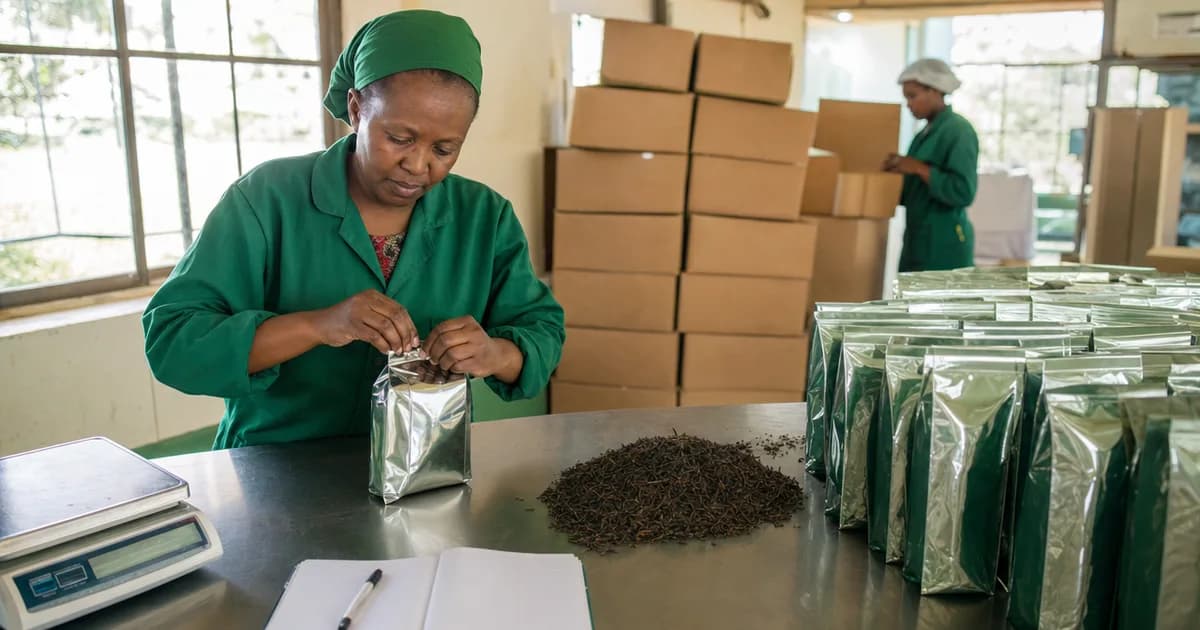
- Value-added formats — packaging, branding and consumer-ready presentation for markets that pay for it, with the labelling and import requirements confirmed per market.
The Import Landed Cost & Margin Planner structure works in reverse here: it is the same discipline of building a delivered cost and net receipt before committing volume.
Note that Kenya's tea institutions — the Board, KTDA and the factory network — already serve most growers. This article is for the packer, exporter or factory-level operator managing its own commercial position, not for a smallholder deciding whether to grow tea.
Last verified: 24 October 2026. Rules, fees, tariffs and market-access decisions change. Confirm the current position with the named authority (or your buyer and clearing agent) before committing money. This is business-planning guidance, not legal, tax, agronomic or export-compliance advice.
Sources
- Kenya News Agency: sweeping reforms to streamline the tea industry
- Kenya News Agency: value addition and new markets as Kenya marks International Tea Day
- Reuters: Kenya tea exports hit by Iran conflict as stocks pile up
- Zawya: Kenyan tea exports shift from Sudan and Iran to China and South Africa
Business startup decision checklist
A free checklist to turn the next decision into a practical action.
More on exporting and compliance
These articles work together: market access and tariff windows, registration and establishment approvals, conformity and clearance changes, and the records a buyer or regulator will ask for.
More insights
Use the full model