BizPlans
BSF frass fertiliser in Kenya: what is it worth to your venture?
Kenya-first insights, practical and grounded.
Published 29/10/2026 - 3 min read
BSF frass fertiliser in Kenya: what is it worth to your venture?
Treat frass as a separate product needing accepted weight, allocated costs and a real offer. A shop listing cannot establish your farm-gate value.
Last verified: 29 October 2026.
Begin with what frass means
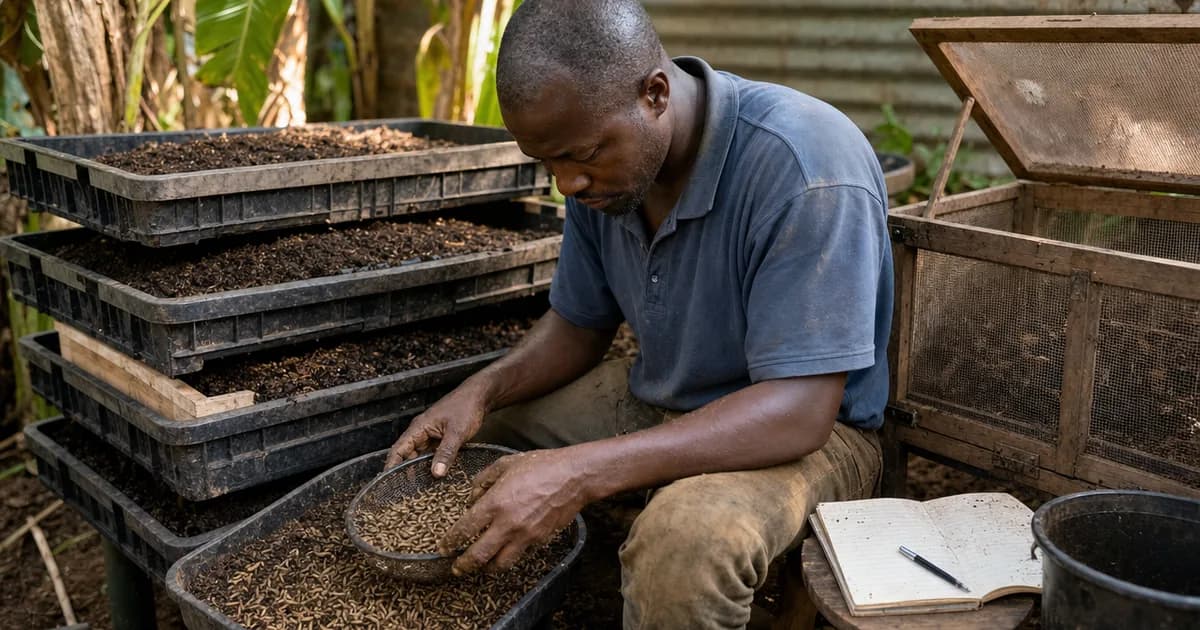
KALRO's brochure describes frass as material including exoskeletons left after larvae are sieved from consumed substrate and discusses its use in improving soil fertility [S1]. This supports investigating a frass product. It does not establish your batch's composition, treatment, selling permission or crop response. Ask qualified support what product evidence is needed for your intended use.
Do not copy a nutrient statement from a commercial listing onto your own package. The supplied evidence does not establish a universal analysis for every producer. Ask the intended buyer and responsible authority which tests, sampling method, laboratory scope and reporting units apply. Tie any actual report to the material tested and keep the original document.
Attribute every reported amount
MarinBio Farm's reported price, reported by FarmBizAfrica, was KSh 40/kg for frass [S5]. Muruga's reported price, reported by Daily Nation, was KSh 60/kg for surplus frass [S6]. Hydro Victoria Africa's listed retail price in its commercial product listing was KSh 50/kg for frass [S7]. These are individual-party observations in different commercial contexts. They are not a Kenyan market price range.
The retail listing does not tell you what a farm receives after preparation, packaging, collection, testing or delivery. The operator reports do not establish current demand in your locality. Keep them as questions to investigate rather than income assumptions. Their reporting dates were not established in the supplied evidence; do not invent a current quotation date.
Measure product separately
Record frass processed weight, rejected weight and accepted weight using a documented method. Keep those kilograms separate from live larvae, dried larvae and incoming wet substrate. Do not assume all residual material is saleable. If the weight basis is uncertain, write needs input and arrange a corrected measurement or qualified review.
Record the costs allocated to frass and explain the basis for sharing equipment, site and labour with larvae production. Count a shared expense once across the venture. A frass credit inserted before any accepted quantity or written offer exists can hide unresolved larvae economics. ILRI leaves large-scale BSFL profitability unclear [S2]; an assumed by-product receipt cannot settle that question.
Ask the prospective customer
Ask what form the customer wants, intended use, quantity, package, quality evidence, delivery location and weighing method. Request KES per stated unit, deductions, offer validity and payment date. If the offer is per bag, ask for its net weight and a compatible written basis before comparing it with a kilogram offer.
Keep the stages of demand evidence separate. General interest, sample acceptance, a written order and a paid delivery are different records. Save feedback with its sample or lot ID. Do not describe a buyer as confirmed simply because a news story mentions the type of customer you hope to reach.
Resolve the selling pathway
ILRI notes an existing production protocol and separate certifications despite no standalone BSFL regulatory framework [S2]. Ask KEBS about the standard and certification applicable to the proposed fertiliser product [S8]. Ask NEMA and the county about site-specific waste and environmental requirements [S9]. This article establishes no licence or compliance status.
The Black Soldier Fly Venture Kit keeps Frass Output separate from Larvae Output and blocks offers without a matching unit basis. Its guide and editable workbook help record the evidence before counting a sale. Keep unknown inputs visible and use actual cash collection dates when planning funding.
Sources
- [S1] KALRO, Processing and Utilization of Black Soldier Fly Frass Manure.
- [S2] ILRI, PAFIE: BSFL in Kenya.
- [S5] FarmBizAfrica, MarinBio Farm report.
- [S6] Daily Nation, Muruga operator report.
- [S7] Hydro Victoria Africa, commercial frass listing.
- [S8] KEBS, standards enquiry point.
- [S9] NEMA, site-specific environmental enquiry point.
Business startup decision checklist
A free checklist to turn the next decision into a practical action.
More insights
Use the full model
Related downloadable guides
Farm the Unfarmed
Compare small-space ventures before you invest
Compare costs, production risks and buyer requirements for insects, worm castings, mushrooms and culinary herbs. Verify local demand and record your own evidence before starting a pilot.