Loading page
BizPlans
Mushroom Farming in Kenya: Costs, Market, and Business Plan Guide
Kenya-first insights, practical and grounded.
Back to insights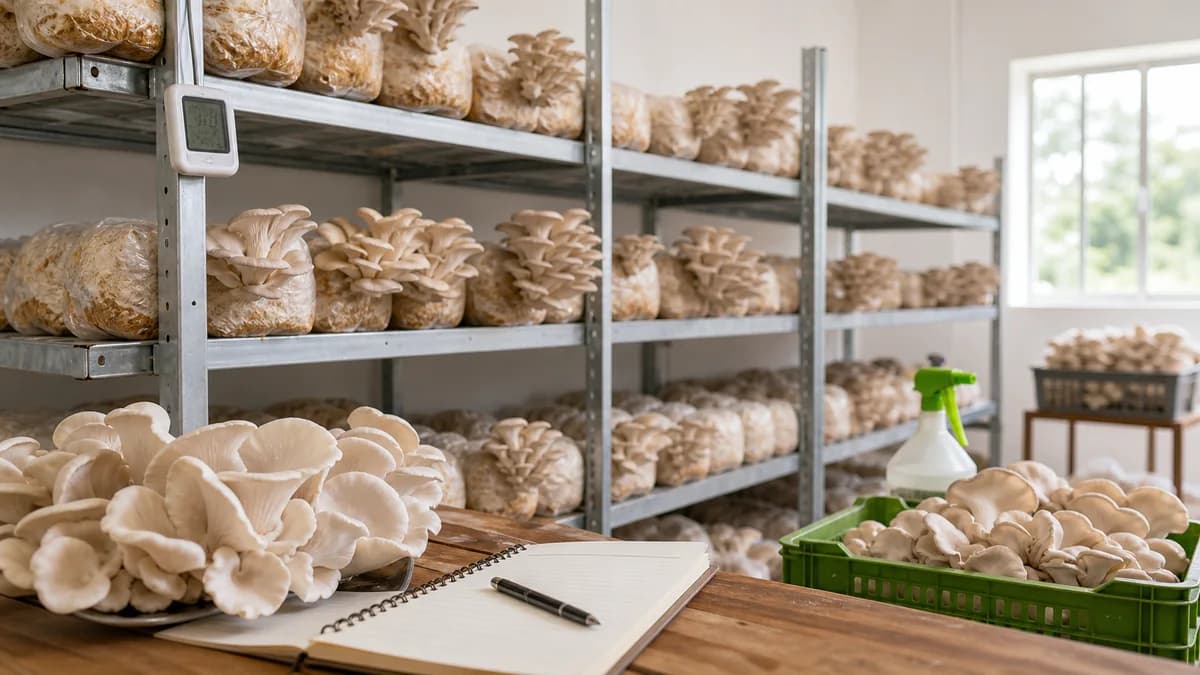
Published 07/07/2026 - 3 min read
Mushroom Farming in Kenya: Costs, Market, and Business Plan Guide
Mushroom farming in Kenya attracts entrepreneurs because it can start in limited space. That does not make it easy. The business depends on hygiene, spawn quality, humidity control, harvest timing, and a buyer plan before production expands.
If you want the downloadable guide, see the Mushroom Farming Business Guide for Kenya. If you need numbers for your own room, location, buyers, and funding request, use the custom business plan builder.
Why beginners consider mushrooms
Mushrooms can be grown in a small room, shed, or controlled structure. This makes them attractive to founders who do not have large acreage. The trade-off is sensitivity: contamination, poor spawn, weak temperature control, or delayed sales can wipe out the expected margin.
Setup needs
A mushroom unit may need:
- Clean growing room or structure
- Shelves or hanging system
- Substrate preparation area
- Quality spawn
- Water and humidity control
- Thermometer or humidity monitoring
- Clean packaging
- Harvesting tools
- Buyer records
Start small enough to learn. Expanding before you understand contamination, labour, harvest timing, and sales cycles is risky.
Cost categories
Budget for:
- Room improvement or structure
- Shelving
- Substrate
- Spawn
- Water and humidity management
- Labour
- Training
- Packaging
- Transport
- Marketing samples
Costs vary widely because some growers adapt an existing room while others build a dedicated structure. A credible business plan should show assumptions rather than pretending one number fits every farmer.
Market channels
Possible buyers include restaurants, hotels, greengrocers, supermarkets, mini-marts, direct households, food processors, and online delivery customers.
Mushrooms are perishable. Do not wait until harvest to search for buyers. Before scaling, record buyer names, target quantities, packaging expectations, price basis, payment terms, and delivery days.
Profitability logic
Profit depends on:
- Number of bags or blocks per cycle
- Harvest per bag or block
- Selling price per kilogram
- Spoilage or rejected produce
- Packaging and delivery costs
- Labour
- Repeat buyer reliability
Use conservative assumptions. A plan that only works with perfect production and premium prices is too fragile.
FAQ
Is mushroom farming profitable in Kenya?
It can be profitable when the grower controls contamination, uses reliable spawn, produces consistently, and has buyers ready. Profit is weak when production starts before market access is proven.
How much space do I need?
You can start in a small clean room or structure, but capacity depends on shelving, humidity control, airflow, and the number of production bags or blocks.
What is the biggest risk?
The biggest risks are contamination, poor spawn, weak hygiene, inconsistent humidity, delayed sales, and relying on a single buyer.
Do I need a mushroom farming business plan PDF?
A PDF guide helps you understand setup, assumptions, and risks. A custom plan is better when you need lender-ready numbers for your exact location and market.
Sources
- KALRO agriculture resources
- Business Registration Service fee schedule
- KRA guide to filing income tax returns
Source check: 7 July 2026. This article is business-planning guidance, not tax, legal, veterinary, financial, or agronomic advice.
Business startup decision checklist
A free checklist to turn the next decision into a practical action.
More insights
Use the full model