Loading page
BizPlans
Pig Farming Business Plan in Kenya: Housing, Costs, Market, and PDF Guide
Kenya-first insights, practical and grounded.
Back to insights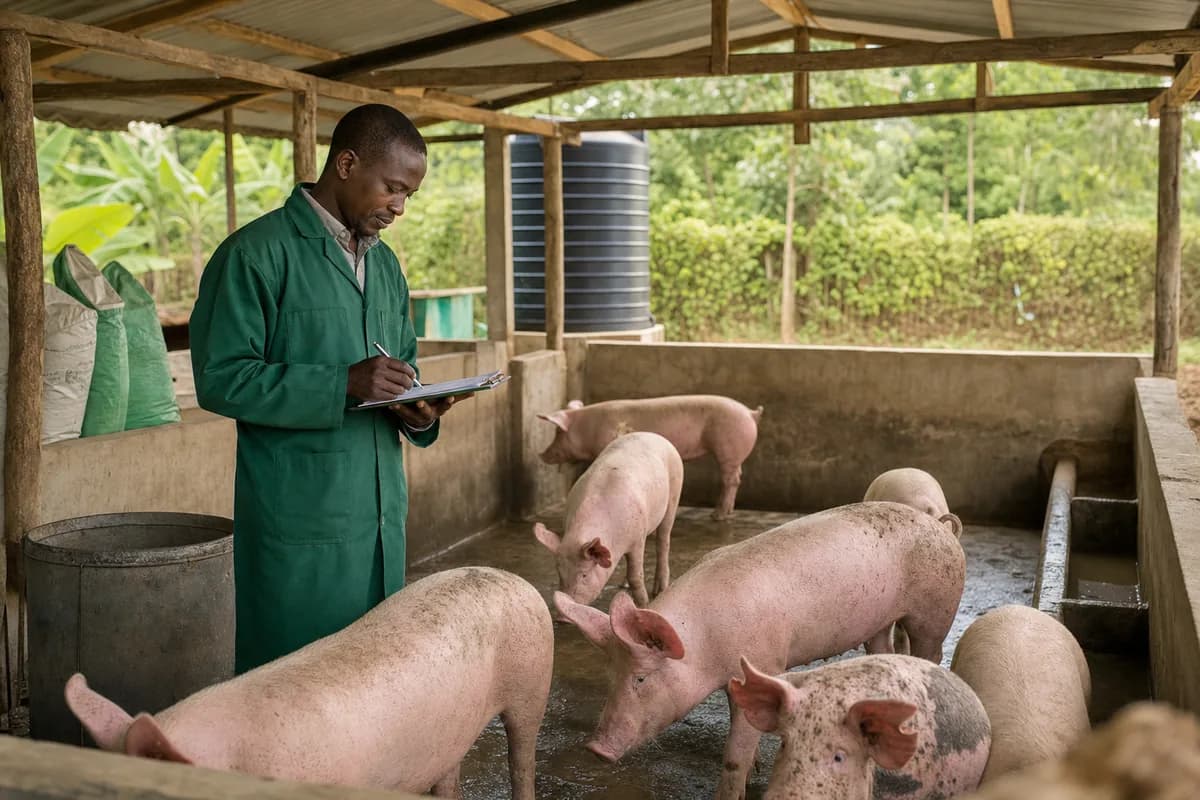
Published 30/07/2026 - 3 min read
Pig Farming Business Plan in Kenya: Housing, Costs, Market, and PDF Guide
Pig farming is a livestock business, not a shortcut to fast profit. A workable plan must connect housing, water, feed, animal health, growth records, buyer specifications, and enough cash to complete the production cycle.
For a ready planning document, see the Small Piggery Business Plan for Kenya. For a lender-facing plan based on your site, herd, quotations, and funding request, use the custom business plan builder.
Define the production model
Decide whether the business will breed piglets, rear growers to sale weight, or combine both activities. Each model has different housing, cash-flow, breeding, record-keeping, and disease-control requirements. A beginner should avoid expanding the herd before one complete cycle has been measured.
Record the proposed starting number, source of animals, housing capacity, feed plan, water supply, labour, veterinary support, target buyer, expected sale specification, and the month in which cash is expected.
Housing and biosecurity
Housing should make cleaning, drainage, feeding, observation, and separation of animals practical. Provide reliable water, ventilation, dry resting space, secure feed storage, and a way to isolate a sick or newly purchased animal.
Kenya's Animal Diseases Act provides for disease prevention and control. The specific pig-disease rules address licensed premises and preventing contact with wild pigs. Movement restrictions can also apply, particularly in infected or restricted areas. Confirm the current requirements with the relevant veterinary authority before buying, moving, or selling animals.
Do not treat medication as a substitute for biosecurity. Control visitors, clean equipment, manage manure, quarantine new stock as advised by a qualified animal-health professional, and keep treatment and mortality records.
Build the cost model from quotations
Include:
- Housing, drainage, feeders, drinkers, and water storage
- Breeding stock or growers
- Feed for the complete cycle, not only the first month
- Veterinary services, vaccines, and approved treatments
- Labour, bedding, cleaning, utilities, and transport
- Mortality and delayed-growth allowance
- Marketing, weighing, and sale logistics
- Working capital and an emergency reserve
Feed is a continuing cash requirement. Obtain written quotations and calculate cost per animal through the planned sale stage. Do not publish a copied profit figure without matching its feed price, survival, sale weight, selling price, and cycle length.
Validate buyers before stocking
Possible routes include licensed slaughter channels, pork processors, traders, institutions, and direct arrangements that comply with applicable public-health and animal-movement rules. Ask each buyer for the required live or dressed specification, minimum quantity, weighing method, deductions, collection responsibility, and payment timing.
A verbal statement that pigs are "in demand" is not enough. Keep dated buyer messages or quotations and model the net amount received after transport, commissions, rejects, and delayed payment.
Use three financial cases
Your spreadsheet should test:
| Case | Assumption |
|---|---|
| Downside | Higher feed cost, slower growth, loss allowance, and weaker sale price |
| Base | Current quotations and conservative performance |
| Upside | Better performance, but only within credible housing and buyer capacity |
If the downside case cannot fund feed and animal care until sale, reduce the starting herd or pause the investment.
Frequently asked questions
Is pig farming profitable in Kenya?
It can be, but profitability depends on feed conversion, animal health, survival, sale specification, price, cycle time, and cash control. A generic margin is not reliable without current quotations and measured production.
Do I need a licence to keep pigs?
Kenya has animal-disease legislation and specific control-of-pig-diseases rules. Requirements can depend on the premises, location, movement, and disease status. Confirm the current position with the competent veterinary and county authorities.
Where can I get the PDF?
The Small Piggery Business Plan for Kenya is a paid downloadable guide. The product page shows the contents and sample option before purchase.
Sources
- Kenya Law: Animal Diseases Act
- Kenya Law: Animal Diseases (Control of Pig Diseases) Rules
- Kenya Law: Animal Diseases Rules
- KALRO repository: Manual for Livestock Production
Source check: 30 July 2026. Prices, yields, permits, and buyer terms vary; verify current local evidence before investing.
Funding preparation checklist
A free checklist to turn the next decision into a practical action.
More insights
Use the full model